
You built their docs...
But you know what happens after you leave.
You mapped their processes. Built the SOPs. Set up the wiki. Trained the team.Six months later, the SOPs are dead, the wiki's a graveyard, and the founder is back to answering every question themselves.It's not a problem with your work.
It's a problem with the tool.
Quaestor maps who does what, in which system, giving your clients an operational atlas.
Roles connect to processes. Processes connect to systems. Everything links.
Nothing stale. Nothing wasted. Every answer at their fingertips.
Your work should outlast your engagement.
So your work keeps working after you leave.
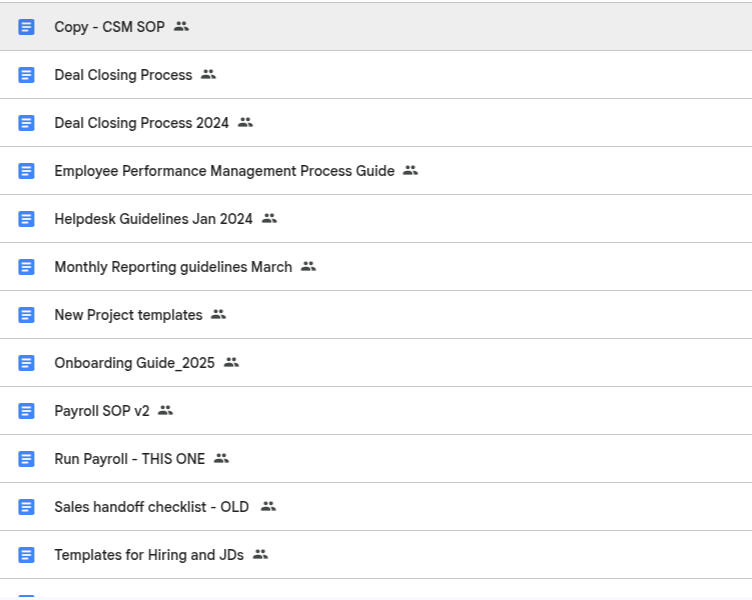
Most “documentation” is a graveyard.
Clients onboard new hires seamlessly
Your system runs without you babysitting it
Key-person risk drops
Nothing goes stale or gets left behind.
Real delegation that holds after you leave
Quaestor routes ownership, keeps the truth tight, and flags what's gone stale before it bites.No more deliverables that die on the vine.
No more SOPs that used to be right.
No more check-ins where you find out nobody's using what you built.
We're onboarding our first ops partners now.
If you want in early, let's talk.
FAQs
How is this different from Notion / Confluence / a wiki?
You've probably set up a Notion workspace for a client before. How's it looking six months later? Those are document storage. Quaestor is a graph. Documents sit in folders and rot. Quaestor connects roles to processes to systems... so when something changes, your client sees what else is affected. When someone searches, they find answers, not a list of files to dig through.
How long does setup take?
You can map a client's core ops in your first engagement session. Start with the 10 processes that live in the founder's head and cause the most interrupts. Expand from there. You're not boiling the ocean, you're giving them a foundation that grows.
What if I already have SOPs and docs?
Good! That means they've tried. Quaestor links to their existing docs, it doesn't replace them. It makes them findable, connected, and owned. You'll finally be able to show them where the gaps are instead of guessing.
Is this just another tool my clients have to maintain?
The whole point is less maintenance. Ownership is explicit. Staleness gets flagged automatically. You're not adding a tool to their stack, you're replacing the duct tape that's already there.
Who is this for?
Fractional COOs, ops consultants, EOS implementers, and integrators who build operational systems for clients and want the work to last. If you're tired of handing off documentation that dies on the vine, this is built for your practice.
You already do the hard part: getting founders to see what's broken.
Give them something that stays fixed.
© Cursus Tools. All rights reserved.